Model behavior
- Psychophysics & signal detection
- Bayesian DDM / LBA
- Mixed-effects models
- ML, calibration & SHAP
Research Scientist · Quantitative UXR · Human Factors
I translate behavioral and physiological evidence into product decisions by combining psychophysics, pupillometry, Bayesian modeling, and working prototypes to understand where performance breaks and what an interface should do next.
Selected work
Each case study shows the question, method, tradeoff, and product implication, not just the final artifact.

01 · XR interaction / remote testbed
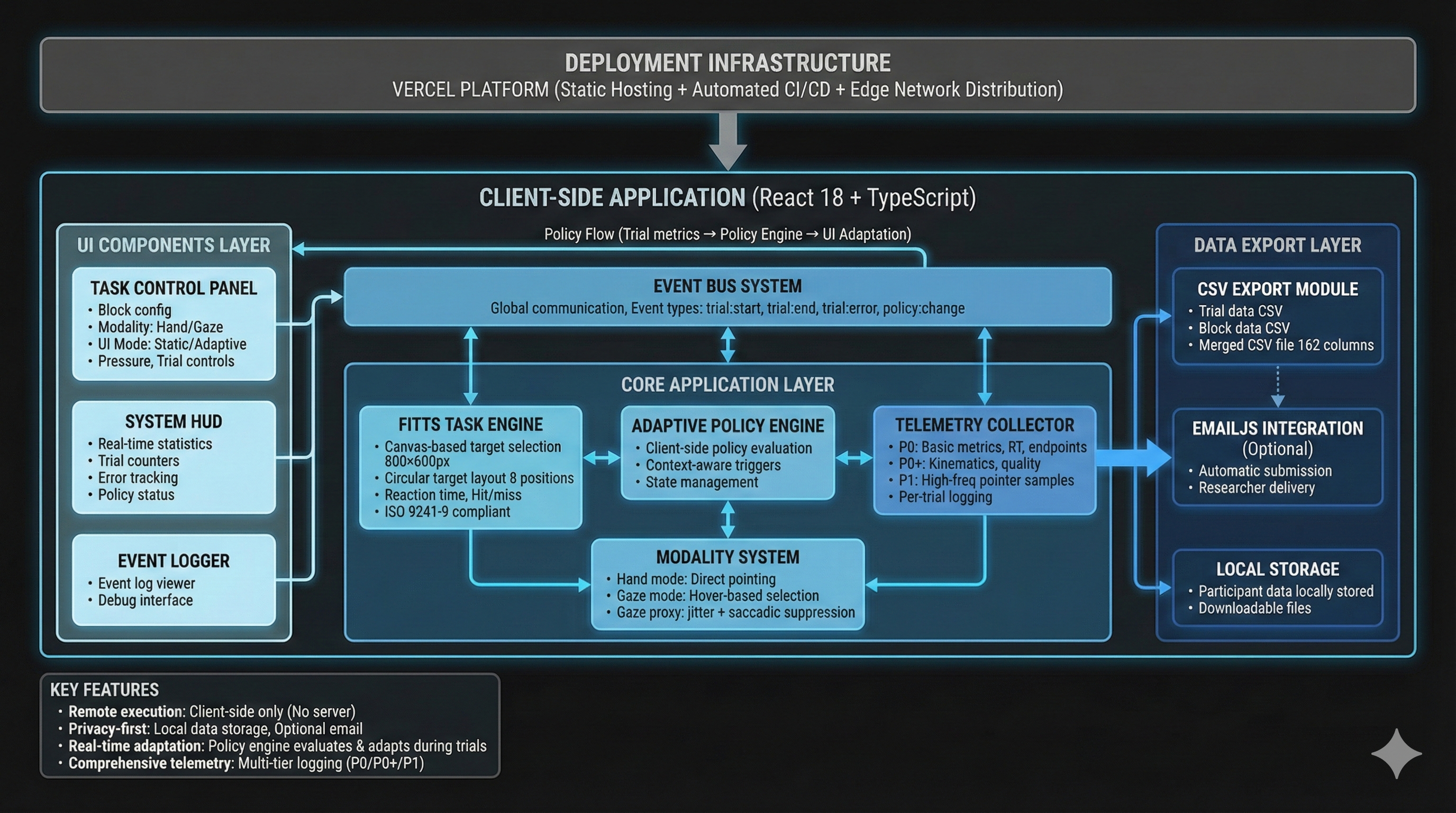
99.2% of gaze errors were slips; hand input reached 5.15 bits/s.
Built a remote testbed, compared hand and simulated gaze with Fitts' law and NASA-TLX, then modeled failure dynamics with a Bayesian LBA. The gaze condition was simulated, not evaluated in a headset.

02 · Human factors / proof of concept
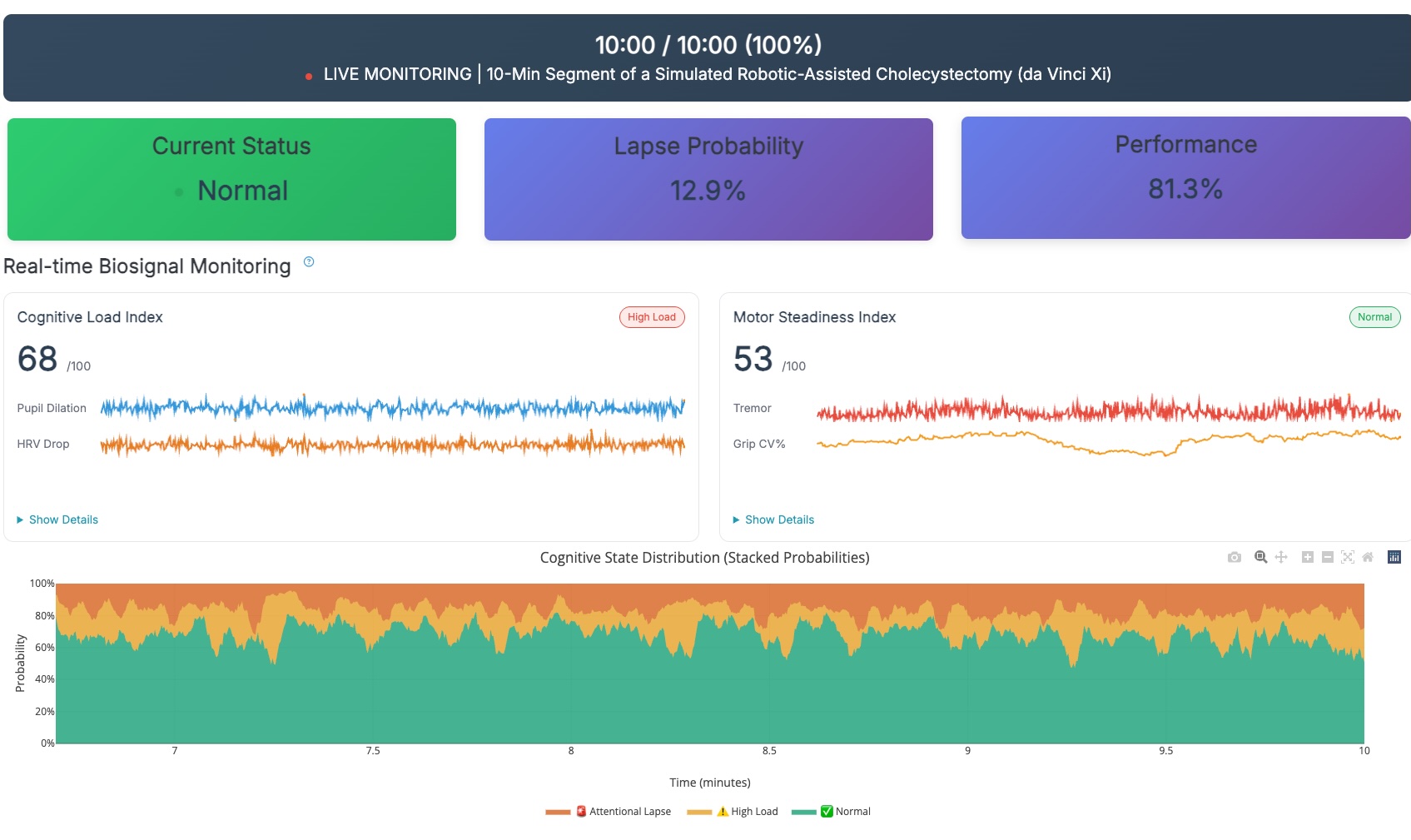
Targeted ≤0.6 alerts/min with calibrated state probabilities.
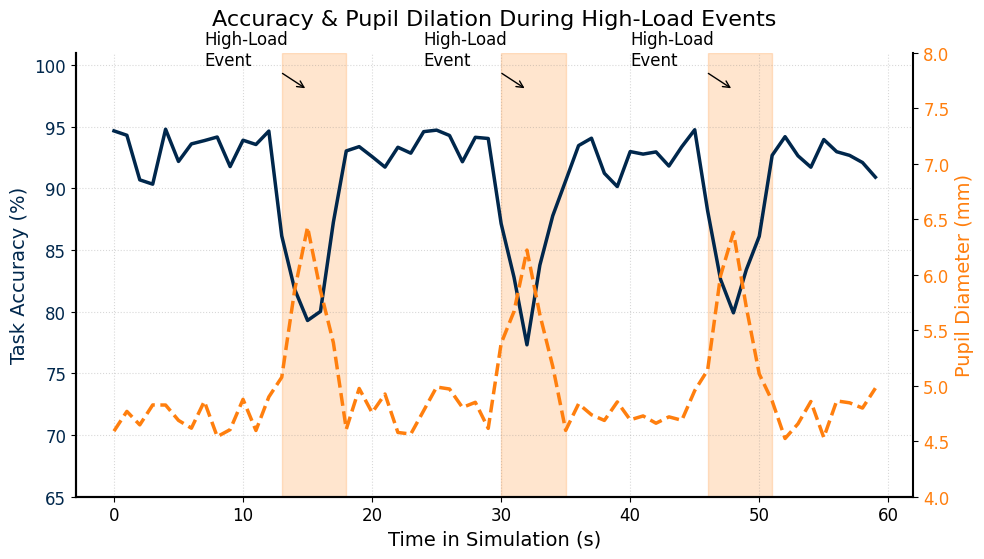
Prototyped a training dashboard that turns pupil, HRV, and grip features into instructional thresholds. All validation used synthetic sessions; clinical effectiveness remains untested.

03 · Research roadmap / in progress
Separating evidence quality, response caution, and motor strain.
A staged dissertation program connecting psychophysics, pupillometry, drift-diffusion modeling, and grip-force signals. Industry applications shown in the case study are concepts, not deployed systems.

04 · Foundational research / NSERC
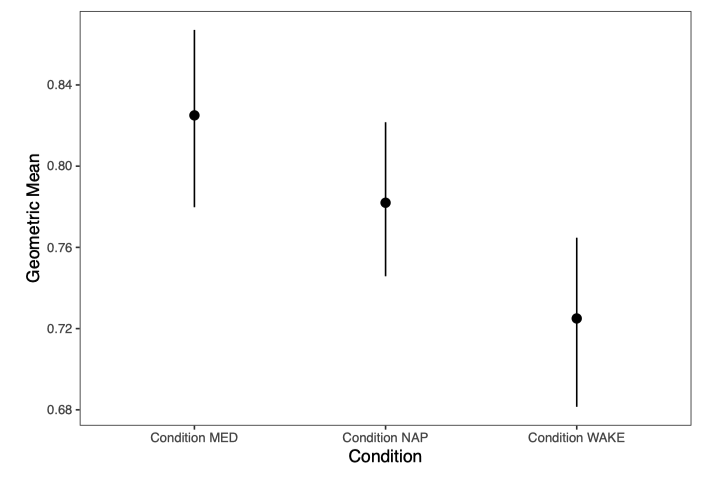
60+ participants across behavioral and EEG measures.
Led a master's thesis from study design through analysis. The findings come from a controlled research sample and should not be read as a general product-effectiveness claim.
Technical toolkit
I work across measurement, inference, and implementation so the research question survives contact with the product.
Start a conversation
I am exploring Research Scientist, Quantitative UXR, and Human Factors roles for Summer / Fall 2026, especially with teams building adaptive, safety-critical, or immersive systems.